Education software
built for how learning works

150+
14
6 months
5/5
Domain expertise
Designed for the systems
education already runs on
The hardest problem in edtech is building products that work within the systems institutions already depend on: LMS ecosystems, accreditation requirements, procurement processes, and data governance. Educators don't have time to adapt their workflows to new tools; products that don’t fit how teaching, assessment, and administration already function won’t get adopted.

1.
K-12 & School Choice
School discovery platforms, scholarship management systems, and family-facing marketplaces built for the US school-choice landscape. Designed around eligibility rules, student data requirements, and regulated payment flows.

2.
Test Prep & Assessment
Exam preparation platforms, adaptive practice systems, and assessment tooling for GCSEs, SATs, entrance exams, and professional qualifications. Built for grading accuracy, realistic mock testing, and measurable learning outcomes.

3.
Higher Education & MBA
LMS-integrated coursework, learning modules, and content authoring tools used by leading universities and institutions. Designed for academic review, accreditation requirements, and non-technical course authors.

4.
Adaptive & Personalized Learning
Learning pathways, recommendation engines, and assessment-driven progression systems that adapt to individual student performance. Built to align with existing curricula and standards without locking institutions into proprietary ecosystems.

5.
AI Tutoring, Authoring & Grading
Production-grade AI tutors, automated grading, and content generation embedded directly into learning workflows. Built with guardrails that protect academic integrity, preserve educator oversight, and align outputs to defined learning outcomes.
Work
Partnerships that translate into measurable learning outcomes
Edtech products that move beyond pilots. Built to be used by students, trusted by educators, and rolled out by institutions without friction.
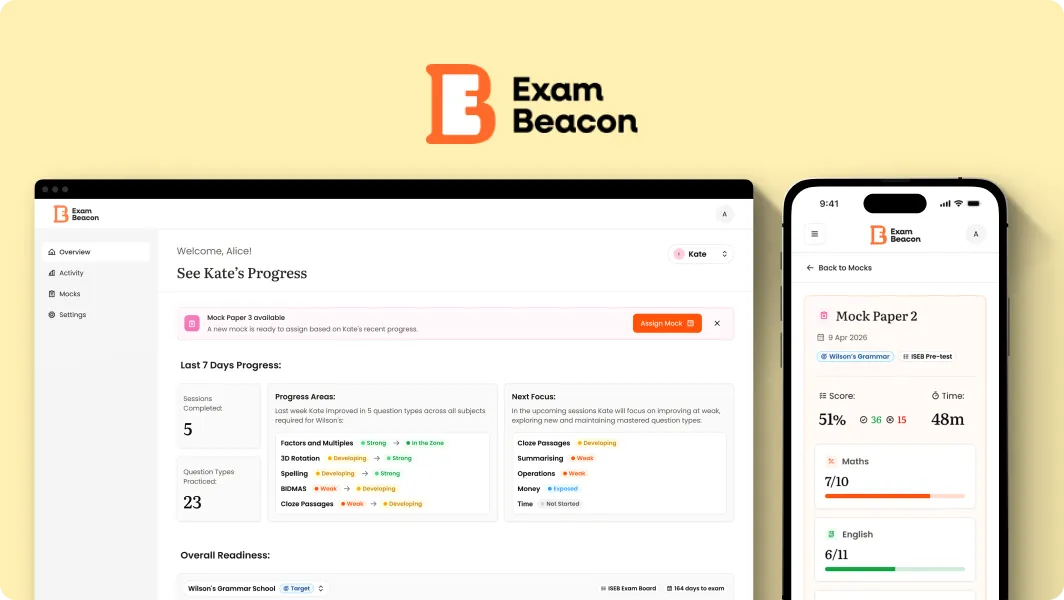
Education / Test Prep & Assessment
Undisclosed
Exam Papers Plus (Exam Beacon)
100,000+
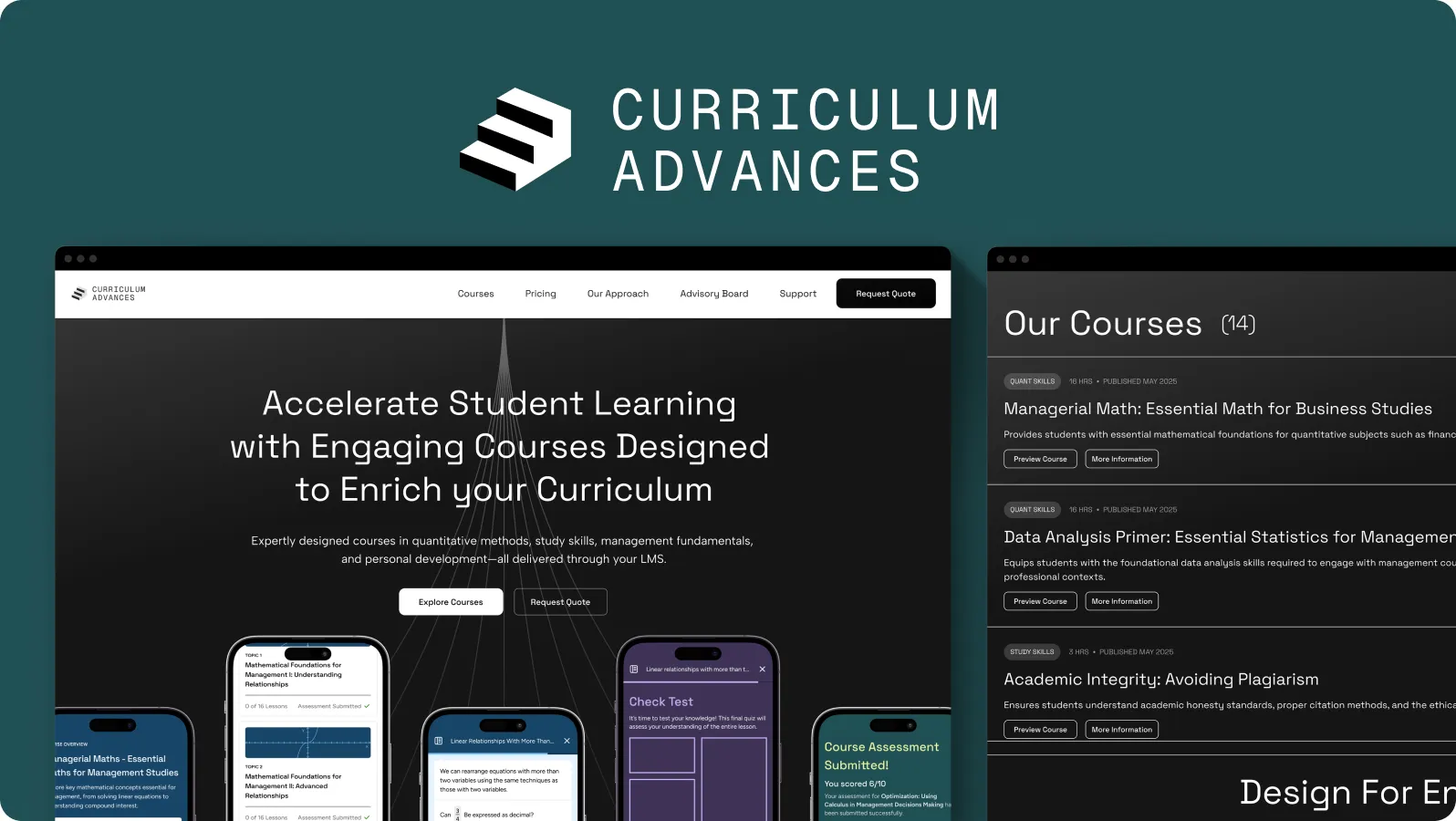
Education / Higher Ed
Undisclosed
Curriculum Advances
150+
David Lefevre, Founder
Our approach
Pedagogy by architecture,
built for real-world rollout
In edtech, content and compliance alone don't drive real-world use. The challenge is building products that students actually benefit from and enjoy, that faculty trust and can pick up easily, and that institutions can rely on at scale. Our approach treats learning design, LMS interoperability, and student data protection as core architecture, so products hold up beyond the demo in real institutional environments.

Understand the institution and its learners

Design around curriculum and assessment

Build & Iterate

Build with real user feedback

Roll out at scale
Building for education? Let's talk.
AI in Education
AI educators trust, and that institutions can stand behind
AI in education has to clear a higher bar than consumer tools. It has to support real learning, stand up to educator scrutiny, and meet institutional expectations on academic integrity, student data protection, and student safety. That last point matters most for under-18 learners, where safeguarding goes beyond data privacy to watching for wellbeing and safety signals, with the right escalation in place. We build explainable AI that embeds into educational workflows, stands up to review, and keeps humans in control of the judgment calls.

How AI shows up in delivery
We apply the same delivery standards internally. AI is embedded across our workflows, allowing us to move faster without sacrificing rigor. For Exam Papers Plus, that discipline enabled a six-month path from concept to an institution-ready platform.
1. AI tutoring & personalized practice
Adaptive tutors and practice engines that move students beyond generic content to pathways shaped by assessment performance and exam results.
2. Grading where it actually helps
Closed questions like multiple choice don't need AI. The hard part is open-ended work, from short answers to essays, where AI speeds grading and feedback while a human stays on the judgment calls.
3. AI that supports authors, not replaces them
Human subject experts write and check the content. AI enriches the experience and speeds the workflow, but the expertise and the final say stay human.
Technology
A stack that holds up against
LMS reality
Education products don’t operate in isolation. They must integrate with LMS platforms, comply with student data regulations, and remain maintainable as teams and institutions evolve. We build on widely adopted, well-supported technologies with deep talent pools, so the stack doesn’t become a hiring or ownership liability.
Frontend


Backend


AI & Data


Infrastructure & Security


Why this matters in education
Interoperability is the hardest non-pedagogical problem in edtech. Our stack is built around open standards and proven technologies, so products can plug into existing institutional ecosystems without complex integrations, vendor lock-in, or hidden maintenance costs.

How we work
Reinforce your team,
or let us own delivery entirely
Different teams need different levels of ownership. Some need senior engineers embedded immediately. Others need a partner who can take full responsibility for discovery and delivery.
Model 01
·
Autonomous Team
We own everything from product direction to delivery end-to-end. You bring the vision and the knowledge, and we handle everything else: the entire process from scoping, system architecture, and UI/UX design, through to development, integrations, and rollout.
Best for:
greenfield edtech products where the stakeholder has a clear vision but needs an experienced team to bring it to life. From creating a clear scope and plan that fits within budget, to owning the entire build process.
Model 02
·
Embedded Roles
We join your product org as full contributors and work alongside your team; same standups, same priorities, same ownership.
Best for:
education companies that have an in-house product development team and are looking for senior roles to increase quality and bandwidth across product management, UI/UX design, software development, and QA.